

How Businesses Can Win Online – With Data
Marketplace Management Services in Kerala: How Businesses Can Win Online – With Data
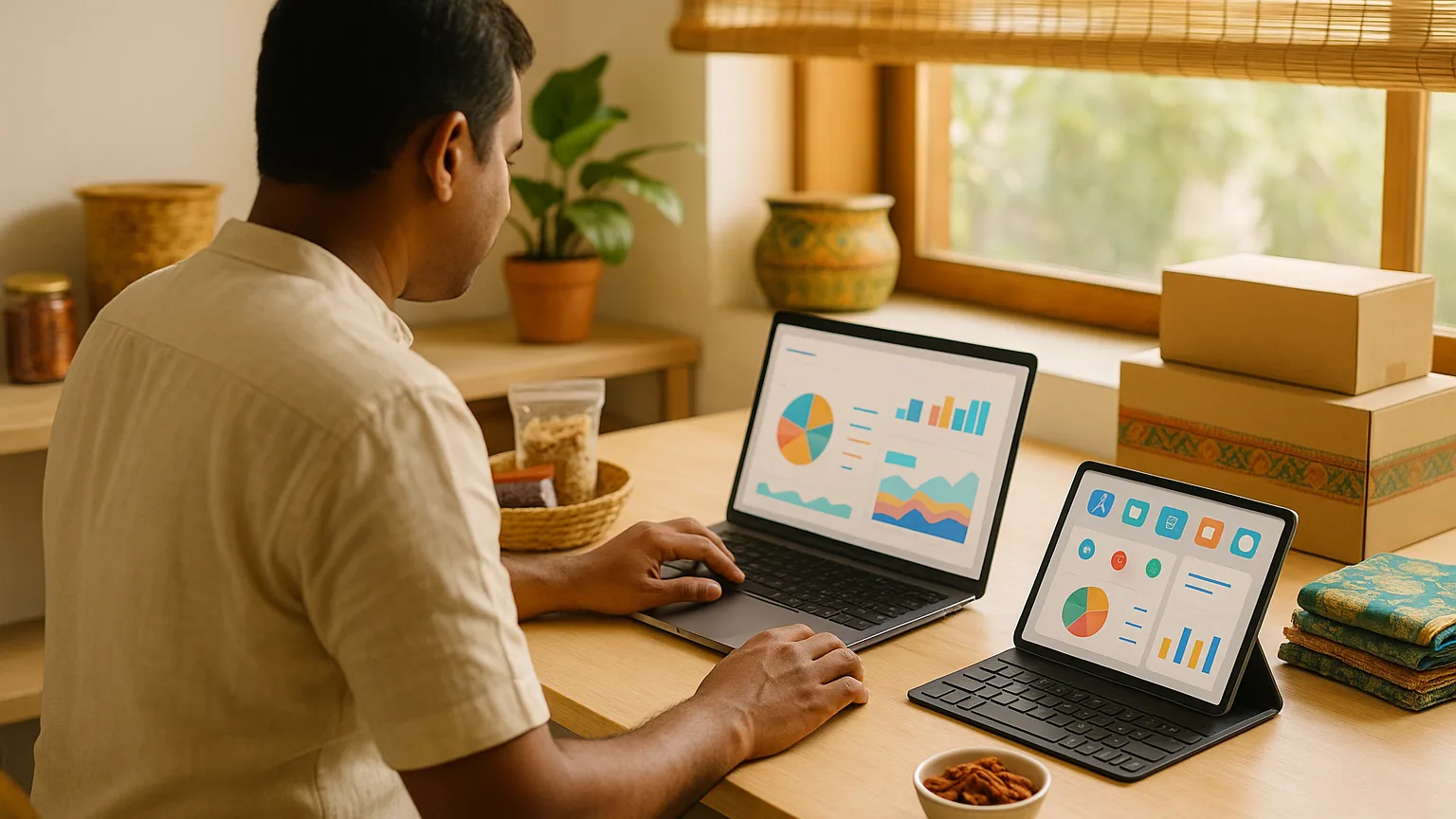
E-commerce in Kerala is no longer niche – it’s growing fast enough to matter to any business that cares about reaching customers where they already shop. The state punches above its weight, and that means marketplace management services are a real opportunity for sellers. Let me walk you through why these services make sense, what they involve, and how to get results-without fluff.
Why Kerala Demands Marketplace Management Services
Kerala is often overlooked. But the numbers tell another story.
Its annual e-commerce turnover hit ₹15,000 crore in 2025, rising 35% year over year. Yet 70% of local retailers still don’t sell online, and those who do face platform fees of up to 30% that slim their margins. That’s a sign of untapped potential.
Local entrepreneurs are everywhere. The state hosts over 23.8 lakh MSMEs and 1.66 lakh small-scale manufacturers. More than 1 lakh new MSMEs emerged between 2022 and 2024 alone, showing rapid industrial growth. Many could gain revenue by going digital – but managing multiple marketplaces, optimizing listings, and juggling logistics isn’t trivial.
Consumers in Kerala shop online at above-average rates – 51% versus the national norm, highlighting a strong digital shopping culture. And the state leads India in internet penetration, with 73% of the population online compared to about 52% nationally. Nearly 90% of in-store buyers research online first – clear evidence from e-commerce adoption data. That means if your products don’t show up when they’re comparing options, you’re invisible.
Plus, Kerala’s diaspora offers a special opportunity – over 3.5 million Keralites live abroad and actively buy items like spices, sarees, and wellness goods, representing a high-value export market. It’s a high-value market your own store could capture if managed well.
Takeaway: When a high-penetration, digitally savvy market like Kerala overlaps with sluggish local listing management, efficient marketplace services can deliver real advantage.
What Marketplace Management Services Cover (And How They Make a Difference)
Here’s what effective management looks like – and why it beats DIY:
Listing & Catalog Optimization
Setting up product titles, images, descriptions, and variations is one thing. But when done right – with SEO-minded enhancements, Malayalam support, and platform-specific rules – you get visibility. A few sellers in Kochi gained 420% more orders in six months just by optimizing their listings.
Channel Coordination
Your spice brand might list on Flipkart, Amazon, Myntra, and niche sites. Keeping SKUs, prices, and inventory synced manually is chaos. Agencies handle that, prevent oversell, and reduce returns.
Social-Commerce Integration
In Kerala, 75% of small vendors now use WhatsApp Business, Instagram Shops, or Facebook Marketplace to sell directly – with no storefront needed. This social selling trend becomes visible demand when synced with marketplaces.
Local Portal & Program Access
Flipkart’s “Samarth” workshops in February 2026 trained 100+ artisans and 160+ women entrepreneurs on onboarding into its marketplace, opening access to 500M+ customers, as outlined in Flipkart’s partnership announcement. A managed service can help artisans or MSMEs navigate eligibility and approval.
Analytics & Adaptation
Real data – views, conversions, bounce rates, search hit terms – needs to inform changes. Kerala sellers benefit when someone reads the dashboards and adjusts titles, discounts, or categories.
Takeaway: It’s not just running stores – it’s fine-tuning them with SEO sensibilities, local know-how, and multi-platform smartness.
Marketplace Management Services + SEO = Smarter Growth
Marketplace listings live in a search-like world – it’s not just about what you sell, but how easily you’re found. SEO practices apply inside marketplaces:
- Use Malayalam and English in titles. Think keywords like “Kerala Kasavu saree online,” as shown in Kerala SEO best practices.
- Make mobile-first layouts: pages should load under 2.5 seconds on 4G with tap-friendly UI, according to regional SEO guidance.
- Apply Product schema (price, reviews, availability) – some platforms support it to surface dynamic info.
- Optimize for voice search with local phrases – Kerala shoppers increasingly use Malayalam voice queries or “near me,” reinforced by e-commerce trend reports.
- Local SEO matters too. Many businesses in Palakkad miss local traffic just by not keeping NAP consistent or optimizing for local keywords, as discussed in digital marketing forums.
Takeaway: SEO isn’t optional – it’s the difference between ranking and being forgotten on crowded marketplaces.
Kerala-Specific Challenges That Services Can Solve
Language & Cultural Nuance
Generic listings miss the Kerala market’s nuances – gift-giving customs, festive seasons like Onam, or dialect variations. Tailoring your content matters.
High Competition, Low Awareness
In 2026, Kerala’s online market still has gaps – few sellers do well SEO, social commerce, or diaspora outreach. Early movers see disproportionate gains, a point noted in Kerala eCommerce studies.
Logistics Complexity
Local delays or unclear delivery options leak trust. Service providers can integrate with Amazon, Flipkart logistics, Delhivery, Blue Dart etc., following regional logistics insights.
Platform Know-how Curiosity
Many small sellers don’t know marketplace rules, FBA vs. inventory models, or policies. Workshops (like Flipkart Samarth) help – but only a few follow through without support.
Takeaway: Without expert help, even motivated sellers lose ground to competitors who get the small details-and Kerala has many of those details.
How to Choose a Marketplace Management Partner
It’s a big decision. Here’s what matters:
- Local experience: Have they managed Kerala sellers before? Do they know Malayalam keywords, local festivals, or diaspora trends?
- Channel breadth: Ask if they cover Flipkart, Amazon, Myntra, Meesho, plus social commerce portals.
- Data transparency: You want dashboards not black boxes. If reporting tools feel like smoke-and-mirrors, that’s a flag.
- Case studies: Have they driven a real uptick? Remember that Kochi boutique that gained 420% orders in 6 months through optimization success?
- Support for artisans/MSMEs: If you’re part of that group, a partner familiar with programs like Flipkart Samarth is a bonus.
Takeaway: Pick a partner who knows Kerala, delivers numbers, and stays accountable.
What Avisha Offers (And Why It Matters)
At Avisha, we built marketplace management services for sellers – including Kerala retailers – who need strategy and execution without drama.
- We manage your product listings, syncing to marketplaces with keyword-first titles, high-res photos optimized for mobile, inventory updates, and product schema best-practices.
- We integrate social commerce too – your WhatsApp storefront, Instagram Shop, and Facebook listings sync with your marketplace catalog.
- We trained artisans through state programs – but what sticks is strategic listing, data reading, and optimization.
- We’ve seen category-page visibility improve by 60% after switching to locale-optimized titles.
- You can explore our marketplace management service page, or check how we handle Flipkart-specific listings.
Takeaway: We bring data, local know-how, and full-channel visibility to your marketplace presence.
Common Pitfalls – And What to Avoid
Plenty of sellers try to go it alone. Watch for:
- Artificial listing volume with poor quality. If you list 200 SKUs but none convert, you’ve added noise.
- Ignoring analytics. If ad spend or visibility rises but sells don’t, tweak. Don’t repeat blindly.
- Over-relying on one platform. A ban or policy change on Flipkart can tank sales – diversify across platforms and social.
- Underinvesting in SEO. Listings without search optimization are basically digital dead weight.
- Neglecting order fulfillment. Being “live” means nothing if orders bounce or return due to delivery failures.
Takeaway: Being online isn’t enough you have to manage listings like active campaigns, not set-and-forget.
FAQ About Kerala Marketplace Management
What marketplaces do Kerala sellers use most?
Amazon India, Flipkart, and Myntra lead, but social commerce platforms and niche sites are rising quickly, especially for local products, according to Kerala e-commerce data.
Is Malayalam language support really necessary?
Yes. Localized product titles and ads significantly boost visibility – voice search in Malayalam is on the rise, especially in smaller districts, as shown in Kerala e-commerce trends.
Can small artisan brands benefit from these services?
Absolutely. Programs like Flipkart Samarth trained over 260 artisans and women entrepreneurs in early 2026 – those with management support benefit most, as noted in Flipkart’s initiative for Kerala artisans.
What’s the size of Kerala’s e-commerce opportunity?
Total sales reached ₹15,000 crore in 2025, about $9 billion in annual value (~$210 per capita), highlighting a major market potential. With rising internet access, that’s expected to grow substantially through 2026.
When you look at the numbers – market scale, demographics, diaspora, platform programs – it’s not hype. Marketplace management services in Kerala deliver measurable lift. If your products don’t appear where customers expect, they go elsewhere.
You can explore how Avisha handles multi-platform presence, optimized listings, and data-driven decisions via our marketplace management page or our Flipkart account services. If you want to dive deeper, let’s talk or head over to Avisha Digital Services.





Leave a Reply